Dr. Rafik Abu Samra introduced robotic-assisted cardiac surgery to the United Arab Emirates. Since 2003 he has performed over 1,700 robotic procedures using the Da Vinci, AESOP, and ZEUS systems — without breaking a single breastbone.
Robotic cardiac procedures performed since 2003 — on three different surgical robots.
Current
Endoscopic
Trained 2003
He sits at a console a few metres away. From it, he controls four robotic arms holding instruments thinner than a finger. A 3D camera magnifies the heart tenfold. Every movement his hands make is mirrored in miniature inside the chest — with tremor filtered out automatically.
The result is the same surgery — coronary bypass, valve repair, valve replacement — performed through ports a few millimetres wide instead of an open chest.
Dr. Rafik views a magnified 3D image of the heart and operates two master controls that translate his hand and finger movements into precise instrument motion.
Three arms hold the surgical instruments; the fourth holds the high-definition 3D endoscope. Each instrument enters through a port between the ribs no larger than 8mm.
The vision tower processes the endoscope feed into a true-3D, ten-times magnified view of the heart — visible only to the surgeon at the console.
Three or four 8mm port-sized incisions instead of one twelve-inch midline scar across your chest.
The breastbone stays intact, so post-operative pain is materially lower than after open surgery.
Most patients are home within a week and back to normal activity in three to four.
Robotic procedures meet or exceed open-surgery outcomes at high-volume centres in suitable patients.
The Da Vinci surgical system is the most widely deployed robotic surgery platform in the world. It has three components: a surgeon console, a patient cart with four robotic arms, and a vision tower that produces a high-definition 3D image of the surgical field.
Dr. Rafik also has experience on the AESOP and ZEUS systems — the platforms on which he originally trained at the Medical University of Leipzig in 2003. Three generations of surgical robots, one surgeon, two decades of cases.
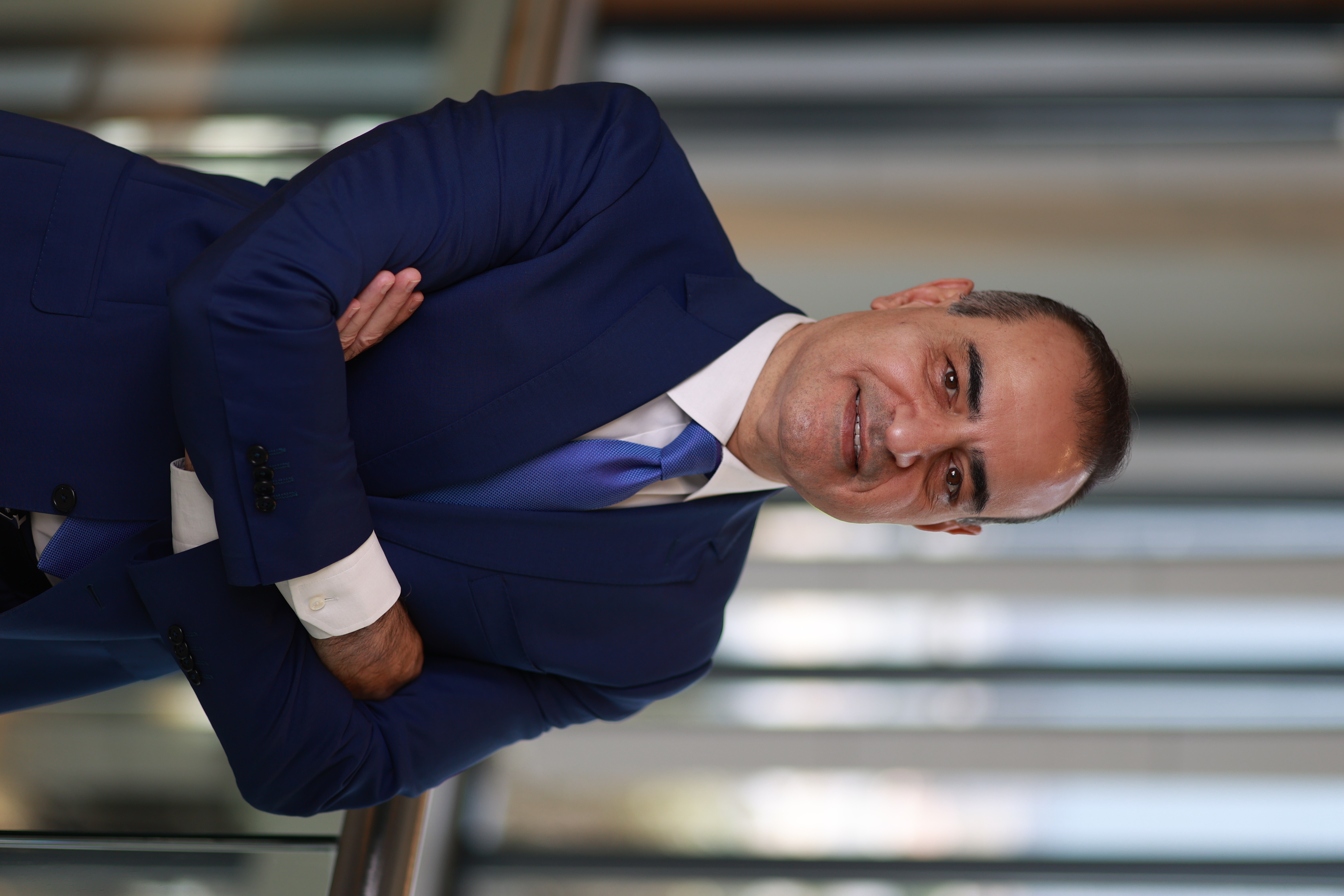
Dubai, UAE
Consultant Cardiac Surgeon
Performed his first 13 robotic coronary bypass procedures on the ZEUS robot during specialist training at the Medical University of Leipzig — one of the world's leading robotic cardiac surgery centres.
As Senior Consultant and Head of Cardiac Surgery at Al Qassimi Hospital, Sharjah, he established the country's first Da Vinci-based cardiac surgery unit and trained the team that runs it today.
Across three robotic platforms (Da Vinci, AESOP, ZEUS), spanning coronary bypass, mitral valve surgery, and minimally invasive endoscopic procedures — one of the highest volumes in the region.
Multi-vessel coronary artery bypass with the LITA harvested robotically, on the beating heart, without the breastbone cut.
Read moreA small left-sided incision combined with endoscopic harvest of the internal thoracic artery — a hybrid between open and fully robotic.
Read moreEndoscopic atraumatic coronary artery bypass with thoracoscopic LITA harvest using the AESOP camera-positioning robot.
Read moreAnnuloplasty, leaflet resection, chordal transfer — the technique-dependent operations of mitral repair, performed through right-sided ports.
Read moreWhen the valve can't be repaired, mitral replacement — mechanical or bioprosthetic — is performed through the same minimally invasive right-side approach.
Read moreTwelve procedures across coronary, valve, aorta, congenital, and arrhythmia surgery — not all robotic, all in his weekly practice.
Open the full listFor a suitable patient, both approaches deliver the same surgical result. The differences are in scar, pain, hospital stay, and how quickly you get back to your life.
Indicative timelines for uncomplicated cases. Your individual recovery may vary based on age, comorbidities, and the specific procedure performed.
Many patients with single- or multi-vessel coronary disease, mitral valve disease, or certain congenital conditions are candidates for a robotic approach.
Some patients are not. Extensive prior chest surgery, severe pulmonary disease, or specific anatomical considerations may favour open surgery. Dr. Rafik will review your imaging and history before recommending an approach — never the other way around.
Send your imaging for reviewA full review of your case — history, examination, prior imaging, current medications. You leave with a clear picture of your options, robotic and otherwise. No commitment.
Coronary angiogram, transthoracic and (where indicated) transoesophageal echocardiogram, ECG-gated CT, lung function tests. Existing imaging is reviewed first; we only repeat what's necessary.
Dr. Rafik plans the procedure with the cardiac team — anaesthetist, perfusionist, scrub team, ICU lead. You meet the team that will be in the operating theatre with you.
Admission the morning of surgery. Three to five hours under anaesthesia depending on the procedure. One night in the cardiac ICU; ward step-down the following day.
Discharge typically on day three to five. Follow-up at two weeks, six weeks, three months. International patients are seen by video for the longer-term follow-ups, with full reports to your home cardiologist.
Send your imaging or book a consultation. Dr. Rafik's team responds within one working day.